

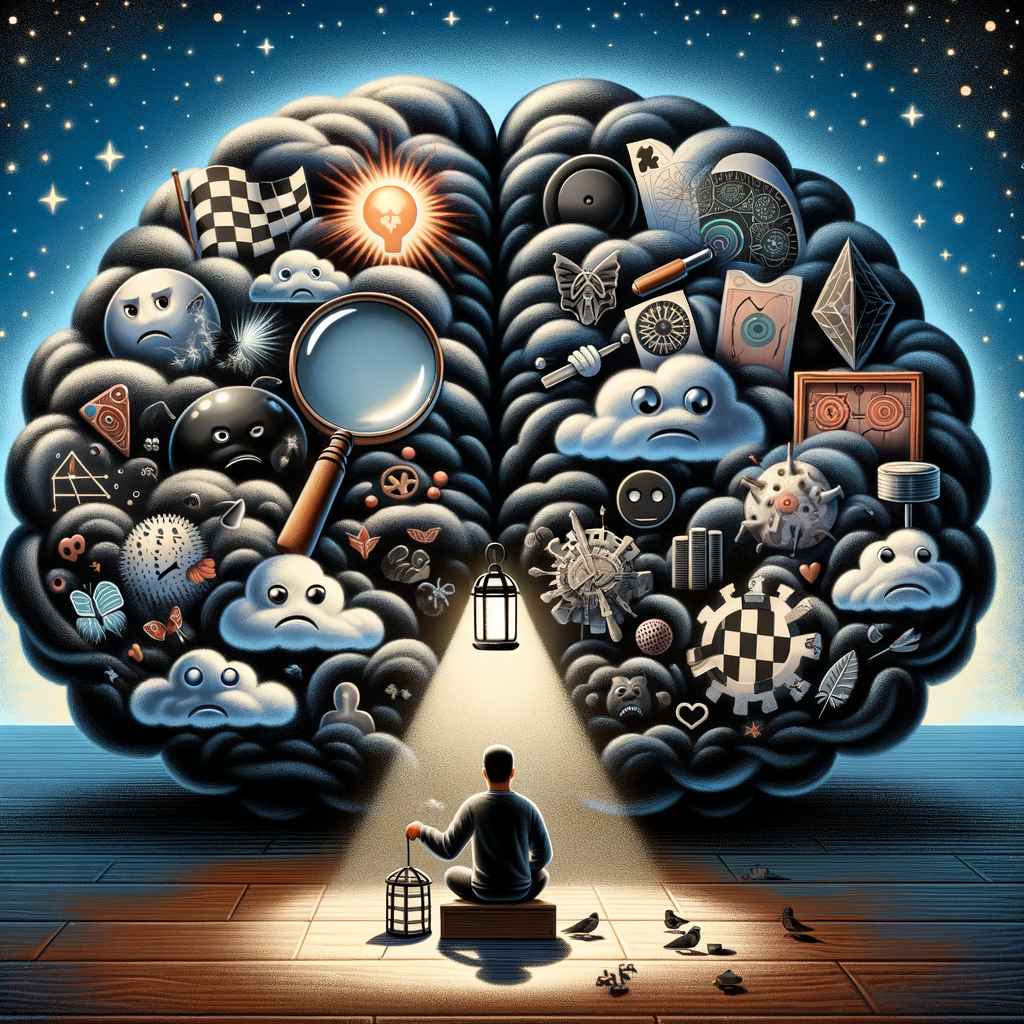
Cognitive Distortions: Identifying and Challenging Negative Thought Patterns
Table of Contents
Introduction
Cognitive distortions are negative thought patterns that can lead to negative emotions and behaviors. They are irrational and often exaggerated beliefs that can cause individuals to perceive reality inaccurately. These thought patterns can contribute to mental health issues such as anxiety, depression, and low self-esteem. Identifying and challenging cognitive distortions is an important step in improving mental health and well-being. By recognizing these patterns and learning to reframe negative thoughts, individuals can develop healthier ways of thinking and coping with life’s challenges.Understanding Cognitive Distortions: What They Are and How They Affect Us
Cognitive distortions are negative thought patterns that can significantly impact our mental health and overall well-being. These distorted thoughts are often automatic and can lead to feelings of anxiety, depression, and low self-esteem. Understanding cognitive distortions and learning how to challenge them is an essential step in improving our mental health. Cognitive distortions are irrational beliefs that we hold about ourselves, others, and the world around us. These beliefs are often based on faulty assumptions and can lead to negative emotions and behaviors. For example, someone who believes that they are a failure may avoid taking on new challenges for fear of failing again. This can lead to a cycle of negative thinking and self-doubt that can be difficult to break. One common cognitive distortion is called “all-or-nothing thinking.” This is when we see things in black and white terms, with no middle ground. For example, if we make a mistake, we may think that we are a complete failure, rather than recognizing that everyone makes mistakes and that it is a normal part of learning and growth. Another common distortion is “catastrophizing,” which is when we assume the worst possible outcome will occur. For example, if we are waiting for test results, we may assume that we have a serious illness, even though there is no evidence to support this belief. This can lead to unnecessary anxiety and stress. “Overgeneralization” is another distortion that involves taking one negative event and assuming that it will happen again and again. For example, if we have a bad experience on a date, we may assume that all future dates will be just as bad. This can lead to a fear of trying new things and can limit our experiences. “Personalization” is when we take responsibility for things that are outside of our control. For example, if a friend is in a bad mood, we may assume that it is our fault, even though there may be other factors at play. This can lead to feelings of guilt and shame that are not warranted. “Mind reading” is when we assume that we know what others are thinking without any evidence. For example, if someone does not respond to our text message right away, we may assume that they are angry with us, even though there could be many other reasons for the delay. These are just a few examples of cognitive distortions, but there are many others. The key to overcoming these negative thought patterns is to first become aware of them. Once we recognize that we are engaging in distorted thinking, we can begin to challenge these beliefs. One way to challenge cognitive distortions is to ask ourselves if there is evidence to support our beliefs. If we are assuming the worst, we can ask ourselves if there is any evidence to suggest that this outcome is likely. We can also look for alternative explanations for events and consider other possible outcomes. Another way to challenge cognitive distortions is to practice self-compassion. Instead of beating ourselves up for making a mistake, we can recognize that we are human and that mistakes are a normal part of life. We can also remind ourselves that we are doing the best we can with the information and resources we have at the time. In conclusion, cognitive distortions can have a significant impact on our mental health, but by becoming aware of these negative thought patterns and challenging them, we can improve our well-being. It takes practice and patience, but with time, we can learn to think more rationally and positively.The Top 10 Most Common Cognitive Distortions and How to Challenge Them

Cognitive distortions are negative thought patterns that can lead to a variety of mental health issues, including anxiety, depression, and low self-esteem. These distorted thoughts are often automatic and can be difficult to recognize and challenge. However, by identifying and challenging these cognitive distortions, individuals can improve their mental health and overall well-being. One of the most common cognitive distortions is all-or-nothing thinking, also known as black-and-white thinking. This distortion involves seeing things in absolute terms, with no middle ground. For example, if someone makes a mistake at work, they may think, “I’m a complete failure,” rather than recognizing that everyone makes mistakes and that it doesn’t define their worth as a person. To challenge this distortion, individuals can practice looking for the gray areas in situations and recognizing that things are rarely all good or all bad. Another common cognitive distortion is overgeneralization. This involves taking one negative event and applying it to all similar situations. For example, if someone has a bad date, they may think, “I’ll never find love,” rather than recognizing that one bad date doesn’t mean they’ll never have a successful relationship. To challenge this distortion, individuals can look for evidence that contradicts their negative belief and remind themselves that one event doesn’t determine their future. Catastrophizing is another cognitive distortion that involves expecting the worst possible outcome in a situation. For example, if someone has a headache, they may think, “I must have a brain tumor,” rather than considering more likely explanations, such as stress or dehydration. To challenge this distortion, individuals can practice looking at the evidence and considering more realistic outcomes. Personalization is a cognitive distortion that involves taking responsibility for things that are outside of one’s control. For example, if a friend is in a bad mood, someone with this distortion may think, “It must be my fault,” rather than recognizing that there could be many reasons for their friend’s mood. To challenge this distortion, individuals can practice reminding themselves that they are not responsible for other people’s emotions and that there are many factors that contribute to someone’s mood. Mind reading is another cognitive distortion that involves assuming that one knows what others are thinking without any evidence. For example, if someone doesn’t respond to a text message right away, someone with this distortion may think, “They must be mad at me,” rather than considering other explanations, such as being busy or not seeing the message. To challenge this distortion, individuals can practice asking for clarification and not jumping to conclusions. Emotional reasoning is a cognitive distortion that involves believing that one’s emotions are a reflection of reality. For example, if someone feels anxious, they may think, “I must be in danger,” rather than recognizing that anxiety can be triggered by many things and doesn’t always mean there is a real threat. To challenge this distortion, individuals can practice looking at the evidence and reminding themselves that emotions are not always accurate indicators of reality. Labeling is a cognitive distortion that involves assigning negative labels to oneself or others based on a single event. For example, if someone makes a mistake, they may think, “I’m an idiot,” rather than recognizing that everyone makes mistakes and that it doesn’t define their intelligence. To challenge this distortion, individuals can practice looking for evidence that contradicts the label and reminding themselves that one event doesn’t define them. Magnification and minimization are cognitive distortions that involve exaggerating the importance of negative events and downplaying the importance of positive events. For example, if someone receives a compliment, they may think, “It doesn’t mean anything,” rather than recognizing that it is a positive reflection of their abilities. To challenge this distortion, individuals can practice giving equal weight to both positive and negative events and recognizing that both are important. Should statements are a cognitive distortion that involves placing unrealistic expectations on oneself or others. For example, if someone doesn’t meet a goal, they may think, “I should have done better,” rather than recognizing that they did their best and that it’s okay to not always meet expectations. To challenge this distortion, individuals can practice being kinder to themselves and recognizing that it’s okay to not always meet expectations. Finally, filtering is a cognitive distortion that involves focusing on the negative aspects of a situation and ignoring the positive aspects. For example, if someone has a successful presentation at work, they may focus on the one mistake they made rather than the overall success. To challenge this distortion, individuals can practice looking for the positive aspects of a situation and giving them equal weight to the negative aspects. In conclusion, cognitive distortions are negative thought patterns that can have a significant impact on mental health. By identifying and challenging these distortions, individuals can improve their mental health and overall well-being. It’s important to remember that challenging cognitive distortions takes practice and patience, but with time and effort, individuals can learn to recognize and change these negative thought patterns.





Comments