


5 Unconventional Yoga Props You Already Have at Home
Table of Contents
Introduction
Yoga is a practice that can be enhanced with the use of props to support and deepen poses. While traditional yoga props like blocks and straps are helpful, there are many unconventional items you may already have at home that can serve the same purpose. Here are five unconventional yoga props you can find around your house to elevate your practice.Creative Ways to Use Household Items as Yoga Props
Yoga is a practice that has been around for thousands of years, and it has evolved to include various styles and techniques. One aspect of yoga that has become increasingly popular is the use of props to enhance the practice. While traditional yoga props like blocks, straps, and bolsters can be purchased at a yoga studio or online, there are also many unconventional props that you may already have at home. These household items can be used to support your practice and help you achieve proper alignment and deeper relaxation. One unconventional prop that you may already have at home is a stack of books. Books can be used in place of a yoga block to provide support and stability in poses like triangle or half-moon. They can also be used to elevate the hips in seated poses or to provide a gentle lift in restorative poses. The great thing about using books as a prop is that you can adjust the height by adding or removing books as needed. Another household item that can be used as a yoga prop is a belt or a scarf. These can be used in place of a yoga strap to help you reach your feet in seated forward folds or to provide support in poses like reclined hand-to-big-toe pose. A belt or scarf can also be used to create resistance in poses like boat pose or to help you find proper alignment in poses like warrior III. A third unconventional prop that you may have at home is a chair. A chair can be used to provide support in standing poses like warrior I or II, or to help you find balance in poses like tree pose. It can also be used to provide a gentle backbend in poses like camel or to provide support in seated poses like forward fold. The key is to make sure that the chair is stable and that you are using it in a way that is safe and supportive. A fourth household item that can be used as a yoga prop is a blanket. A blanket can be folded and used to provide cushioning for the knees in poses like camel or to provide support for the back in poses like fish pose. It can also be rolled up and used to provide support for the neck in poses like shoulder stand or to provide a gentle lift in restorative poses like legs up the wall. Finally, a fifth unconventional prop that you may have at home is a wall. A wall can be used to provide support in standing poses like half-moon or to help you find proper alignment in poses like handstand. It can also be used to provide a gentle stretch in poses like downward-facing dog or to provide support in restorative poses like legs up the wall. In conclusion, there are many unconventional yoga props that you may already have at home. These household items can be used to enhance your practice and help you achieve proper alignment and deeper relaxation. Whether you are using a stack of books, a belt or scarf, a chair, a blanket, or a wall, the key is to be creative and to use these props in a way that is safe and supportive. With a little bit of imagination, you can turn everyday items into valuable tools for your yoga practice.Enhancing Your Yoga Practice with Unconventional Props
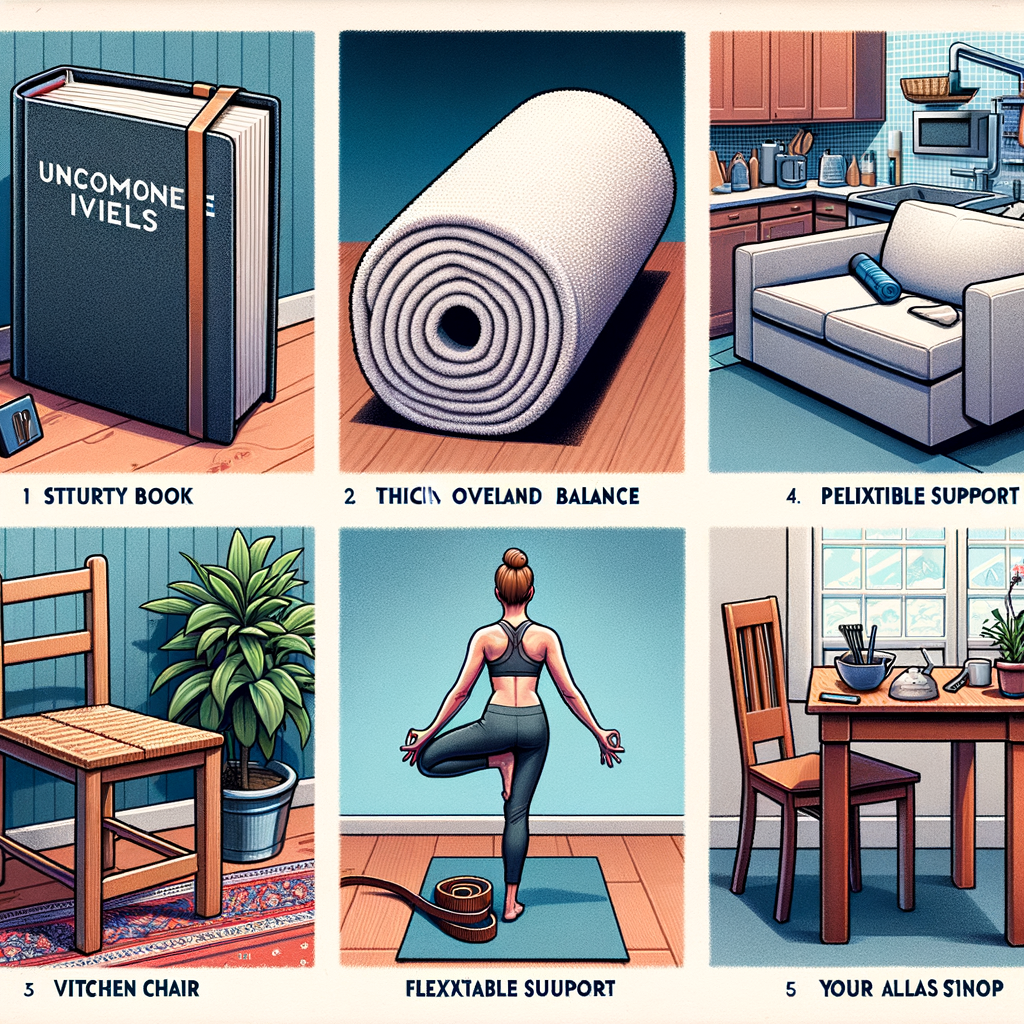
Yoga is a practice that has been around for thousands of years, and it has evolved to include various styles and techniques. One aspect of yoga that has gained popularity in recent years is the use of props to enhance the practice. While traditional yoga props like blocks, straps, and bolsters are widely available, there are also unconventional props that you may already have at home that can be just as effective. One such prop is a chair. A chair can be used to support various poses, such as seated forward bends or supported backbends. It can also be used to help with balance in standing poses or to provide a stable surface for arm balances. The key is to make sure the chair is sturdy and does not have wheels, as this could lead to injury. Another unconventional prop is a wall. A wall can be used for support in standing poses, such as tree pose or warrior III. It can also be used for inversions, such as handstands or headstands, to help with balance and alignment. Additionally, a wall can be used for restorative poses, such as legs up the wall, to help with relaxation and stress relief. A third prop that you may already have at home is a blanket. A blanket can be folded or rolled up to provide support in seated poses, such as easy pose or hero pose. It can also be used to provide cushioning for the knees in poses like camel pose or lunges. Additionally, a blanket can be used to cover the body during savasana, the final relaxation pose, to help keep the body warm and comfortable. A fourth unconventional prop is a belt or scarf. A belt or scarf can be used in place of a traditional yoga strap to help with flexibility in poses like seated forward bends or reclining hand-to-big-toe pose. It can also be used to help with alignment in poses like triangle pose or extended side angle pose. The key is to make sure the belt or scarf is long enough to provide the necessary support and does not have any sharp edges that could cause injury. Finally, a fifth unconventional prop is a book. A book can be used in place of a traditional yoga block to provide support in poses like half moon pose or supported bridge pose. It can also be used to provide height in seated poses, such as easy pose or lotus pose. The key is to make sure the book is sturdy and does not have any sharp edges that could cause injury. In conclusion, there are many unconventional props that you may already have at home that can be used to enhance your yoga practice. These props can provide support, help with balance and alignment, and aid in relaxation. The key is to be creative and think outside the box when it comes to using props in your practice. With a little imagination, you can take your yoga practice to the next level and experience the many benefits that yoga has to offer.





Comments