

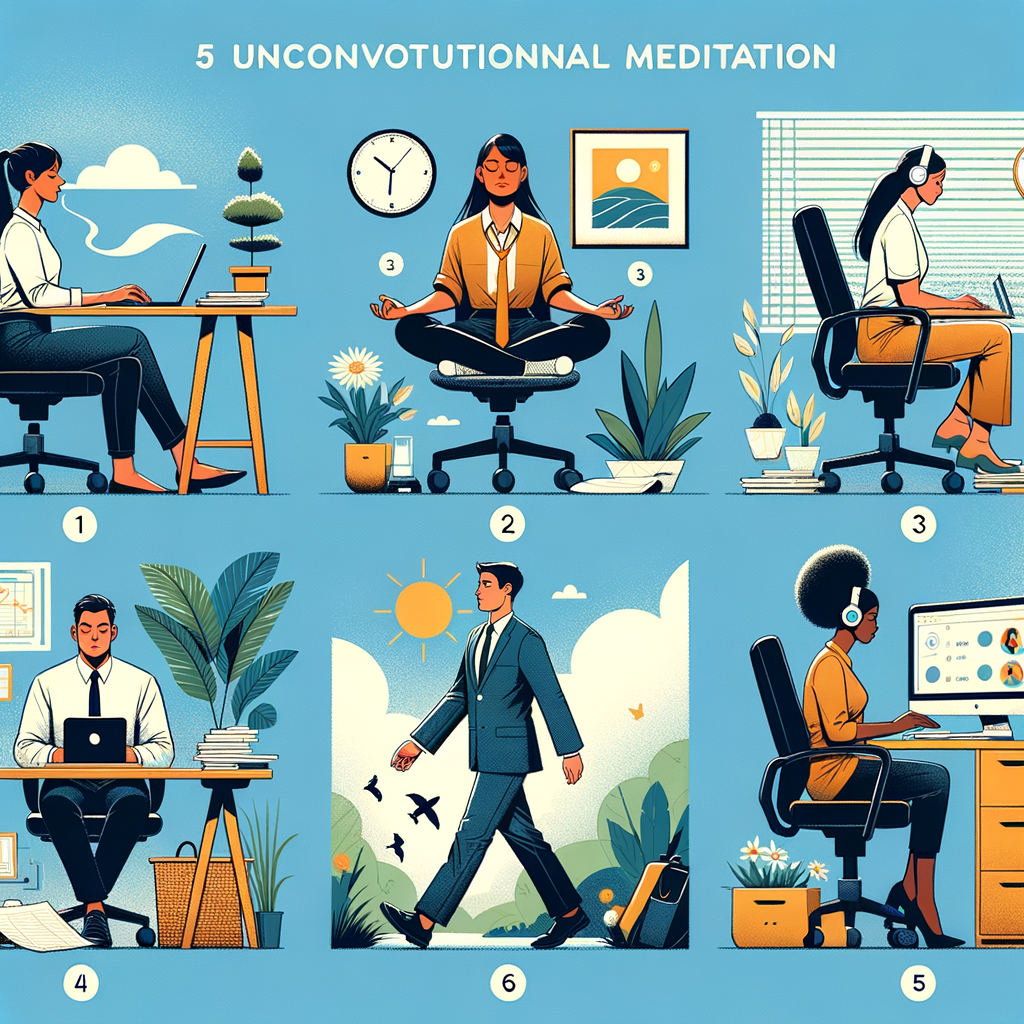
5 Unconventional Meditation Techniques for Busy Professionals
Table of Contents
Introduction
Meditation has long been recognized as an effective way to reduce stress and improve overall well-being. However, for busy professionals, finding the time and space to practice traditional meditation techniques can be challenging. Fortunately, there are unconventional meditation techniques that can be easily incorporated into a hectic schedule. These methods offer the benefits of meditation without requiring a significant time commitment or a specific environment. In this introduction, we will explore five unconventional meditation techniques that are perfect for busy professionals looking to find moments of calm and clarity in their fast-paced lives.Exploring Walking Meditation: A Guide for Busy Professionals
Meditation has long been recognized as a powerful tool for reducing stress, improving focus, and enhancing overall well-being. However, for busy professionals, finding the time to sit still and meditate can be a challenge. Fortunately, there are several unconventional meditation techniques that can be easily incorporated into a hectic schedule. One such technique is walking meditation, which offers a unique way to combine mindfulness with physical activity. Walking meditation involves paying close attention to the sensations of walking, such as the feeling of your feet touching the ground, the rhythm of your breath, and the movement of your body. This practice can be done anywhere, whether it’s a quiet park or a busy city street. The key is to walk slowly and deliberately, focusing on each step and breath. By doing so, you can cultivate a sense of calm and presence, even amidst the chaos of daily life. Another unconventional meditation technique is mindful eating. This practice involves paying close attention to the experience of eating, savoring each bite, and noticing the flavors, textures, and sensations of the food. Mindful eating can help you become more aware of your body’s hunger and fullness cues, leading to healthier eating habits. It can also be a way to practice gratitude for the food you have and the nourishment it provides. For those who struggle to find time for meditation, micro-meditations can be a helpful solution. These are brief moments of mindfulness that can be practiced throughout the day, such as taking a few deep breaths before a meeting or pausing to notice the sensations of your body while waiting in line. Micro-meditations can help you stay grounded and present, even in the midst of a busy schedule. Another technique that can be easily incorporated into a professional’s routine is mantra meditation. This involves repeating a word or phrase silently to yourself, which can help to quiet the mind and focus your attention. Mantras can be chosen based on personal preference or specific goals, such as cultivating compassion or reducing stress. By repeating a mantra throughout the day, you can create a sense of calm and clarity that can help you navigate the demands of your work. Finally, visualization meditation can be a powerful tool for busy professionals. This technique involves creating a mental image of a peaceful and calming place, such as a beach or a forest. By focusing on this image, you can transport yourself to a state of relaxation and tranquility, even if only for a few moments. Visualization meditation can be especially helpful for those who struggle with anxiety or stress, as it can provide a mental escape from the pressures of work. In conclusion, meditation doesn’t have to involve sitting still for long periods of time. By exploring unconventional techniques such as walking meditation, mindful eating, micro-meditations, mantra meditation, and visualization meditation, busy professionals can find ways to incorporate mindfulness into their daily lives. These practices can help to reduce stress, improve focus, and enhance overall well-being, making them valuable tools for anyone looking to thrive in a fast-paced world.The Power of Mantra Meditation: Finding Focus in a Hectic World

Meditation has long been recognized as a powerful tool for reducing stress, improving focus, and enhancing overall well-being. However, for busy professionals, finding the time and space to meditate can be a challenge. Traditional meditation techniques, such as sitting in silence and focusing on the breath, may not always be practical in a hectic work environment. Fortunately, there are several unconventional meditation techniques that can be easily incorporated into a busy schedule. One such technique is mantra meditation. Mantra meditation involves repeating a word or phrase, known as a mantra, to help focus the mind and block out distractions. This technique can be particularly effective for professionals who struggle with racing thoughts or difficulty concentrating. By repeating a mantra, the mind is given a specific task to focus on, which can help to quiet the internal chatter and bring a sense of calm and clarity. Another unconventional meditation technique is walking meditation. This practice involves focusing on the sensation of walking, such as the feeling of the feet touching the ground or the rhythm of the breath. Walking meditation can be done anywhere, from a busy city street to a quiet park, making it an ideal option for professionals who are always on the go. By bringing mindfulness to the act of walking, this technique can help to reduce stress and increase focus, even in the midst of a busy day. For those who spend a lot of time at a desk, desk meditation can be a helpful tool. This technique involves taking a few moments to close the eyes, relax the body, and focus on the breath. Desk meditation can be done in as little as five minutes, making it a practical option for professionals with limited time. By taking a brief pause to meditate at the desk, it is possible to recharge and refocus, leading to increased productivity and reduced stress. Another unconventional meditation technique is visualization. This practice involves creating a mental image of a peaceful and calming scene, such as a beach or a forest. Visualization can be done anywhere and at any time, making it a versatile option for busy professionals. By focusing on a calming image, the mind is able to let go of stress and anxiety, leading to a greater sense of well-being. Finally, mindfulness meditation is a technique that can be easily incorporated into daily life. Mindfulness involves bringing attention to the present moment, without judgment or distraction. This can be done while performing everyday tasks, such as eating, driving, or even working. By practicing mindfulness, professionals can learn to stay present and focused, even in the midst of a busy and demanding schedule. In conclusion, meditation is a powerful tool for reducing stress and improving focus, but traditional techniques may not always be practical for busy professionals. By incorporating unconventional meditation techniques, such as mantra meditation, walking meditation, desk meditation, visualization, and mindfulness, it is possible to find focus and calm in a hectic world. These techniques can be easily integrated into a busy schedule, making them an ideal option for professionals looking to enhance their well-being and productivity.





Comments