


5 Surprising Ways Therapy Can Boost Your Career Success
Table of Contents
Introduction
Therapy is often associated with personal growth and emotional healing, but it can also have a significant impact on your professional life. Here are five surprising ways that therapy can boost your career success: 1. Improved Communication Skills: Therapy can help you develop better communication skills, which are essential for building strong relationships with colleagues and clients. 2. Increased Self-Awareness: Therapy can increase your self-awareness, allowing you to understand your strengths and weaknesses and how they impact your work performance. 3. Enhanced Emotional Intelligence: Therapy can improve your emotional intelligence, helping you to better manage your emotions and respond to the emotions of others in the workplace. 4. Reduced Stress and Anxiety: Therapy can help you manage stress and anxiety, leading to increased productivity and better decision-making. 5. Greater Confidence: Therapy can boost your confidence, allowing you to take on new challenges and pursue career advancement opportunities with greater ease.The Impact of Improved Mental Health on Job Performance
Therapy is often associated with personal growth and emotional healing, but its benefits extend far beyond the realm of mental health. In fact, therapy can have a significant impact on your career success. Here are five surprising ways that therapy can boost your job performance and help you achieve your professional goals. Firstly, therapy can help you develop better communication skills. Effective communication is essential in the workplace, whether you’re collaborating with colleagues, presenting ideas to clients, or negotiating with vendors. Therapy can teach you how to express yourself clearly and assertively, listen actively, and respond empathetically. These skills can improve your relationships with coworkers and superiors, leading to a more positive and productive work environment. Secondly, therapy can increase your self-awareness. By exploring your thoughts, feelings, and behaviors in a safe and supportive setting, you can gain a deeper understanding of yourself and your motivations. This self-awareness can help you identify your strengths and weaknesses, set realistic goals, and make informed decisions about your career. It can also help you recognize and overcome any self-limiting beliefs or patterns that may be holding you back from reaching your full potential. Thirdly, therapy can enhance your emotional intelligence. Emotional intelligence is the ability to recognize and manage your own emotions, as well as the emotions of others. It’s a critical skill for success in the workplace, as it allows you to navigate complex social situations, build strong relationships, and lead effectively. Therapy can help you develop greater emotional intelligence by teaching you how to regulate your emotions, empathize with others, and resolve conflicts constructively. Fourthly, therapy can improve your stress management skills. Work-related stress is a common issue that can take a toll on your mental and physical health, as well as your job performance. Therapy can teach you how to cope with stress in healthy ways, such as through relaxation techniques, mindfulness practices, and time management strategies. By learning how to manage stress effectively, you can reduce its impact on your work and maintain a better work-life balance. Finally, therapy can boost your confidence and self-esteem. Confidence is key to success in any career, as it allows you to take risks, seize opportunities, and assert yourself in the workplace. Therapy can help you build confidence by challenging negative self-talk, setting achievable goals, and celebrating your accomplishments. With greater confidence and self-esteem, you’ll be more likely to pursue your career aspirations and achieve your professional goals. In conclusion, therapy can have a profound impact on your career success. By improving your communication skills, self-awareness, emotional intelligence, stress management skills, and confidence, therapy can help you excel in your job and reach new heights in your career. So if you’re looking to boost your job performance and achieve greater success, consider seeking out therapy as a valuable tool for personal and professional growth.How Therapy Can Enhance Communication Skills in the Workplace
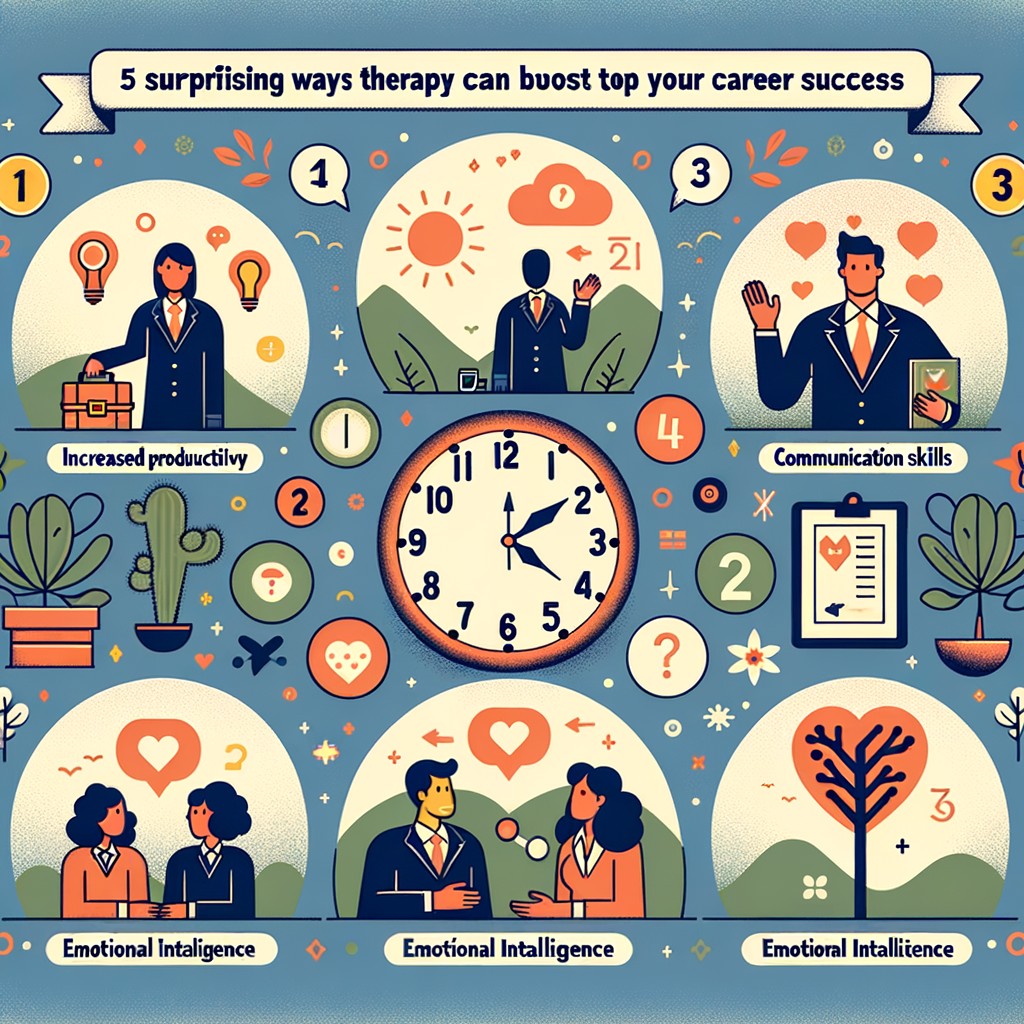
Therapy is often associated with personal growth and emotional healing, but it can also have a significant impact on one’s professional life. In fact, therapy can boost career success in a number of surprising ways. One of the most important ways therapy can enhance career success is by improving communication skills in the workplace. Effective communication is essential in any professional setting. It is the foundation of strong working relationships, successful teamwork, and efficient problem-solving. However, many people struggle with communication skills, whether it’s due to social anxiety, lack of confidence, or difficulty expressing themselves. Therapy can help individuals overcome these challenges and develop the skills they need to communicate effectively in the workplace. One way therapy can enhance communication skills is by helping individuals become more self-aware. Through therapy, individuals can gain a better understanding of their own communication style, including their strengths and weaknesses. This self-awareness can help individuals identify areas where they need to improve and develop strategies to do so. For example, someone who struggles with assertiveness may work with their therapist to develop techniques for speaking up and expressing their opinions in a respectful and confident manner. Therapy can also help individuals develop better listening skills. Active listening is a crucial component of effective communication, but it can be difficult to master. In therapy, individuals can learn how to listen more attentively and empathetically, which can improve their ability to understand and respond to others in the workplace. This can lead to more productive conversations, better collaboration, and stronger working relationships. Another way therapy can enhance communication skills is by helping individuals manage their emotions. Strong emotions can interfere with communication, leading to misunderstandings and conflicts. Therapy can help individuals learn how to regulate their emotions and respond to challenging situations in a calm and constructive manner. This can be especially beneficial in high-stress work environments where tensions can run high. Therapy can also help individuals develop better conflict resolution skills. Conflict is a natural part of any workplace, but it can be difficult to navigate. In therapy, individuals can learn how to approach conflicts in a healthy and productive way, which can lead to more positive outcomes. This can include learning how to communicate assertively, finding common ground, and working towards mutually beneficial solutions. Finally, therapy can help individuals build their confidence and self-esteem, which can have a positive impact on their communication skills. When individuals feel confident in themselves, they are more likely to speak up, share their ideas, and take on leadership roles. This can lead to greater visibility and recognition in the workplace, which can ultimately boost career success. In conclusion, therapy can have a significant impact on career success by enhancing communication skills in the workplace. By improving self-awareness, listening skills, emotional regulation, conflict resolution skills, and confidence, therapy can help individuals become more effective communicators and leaders. Whether you’re looking to advance in your current role or take on new challenges, therapy can provide the tools you need to succeed.





Comments