

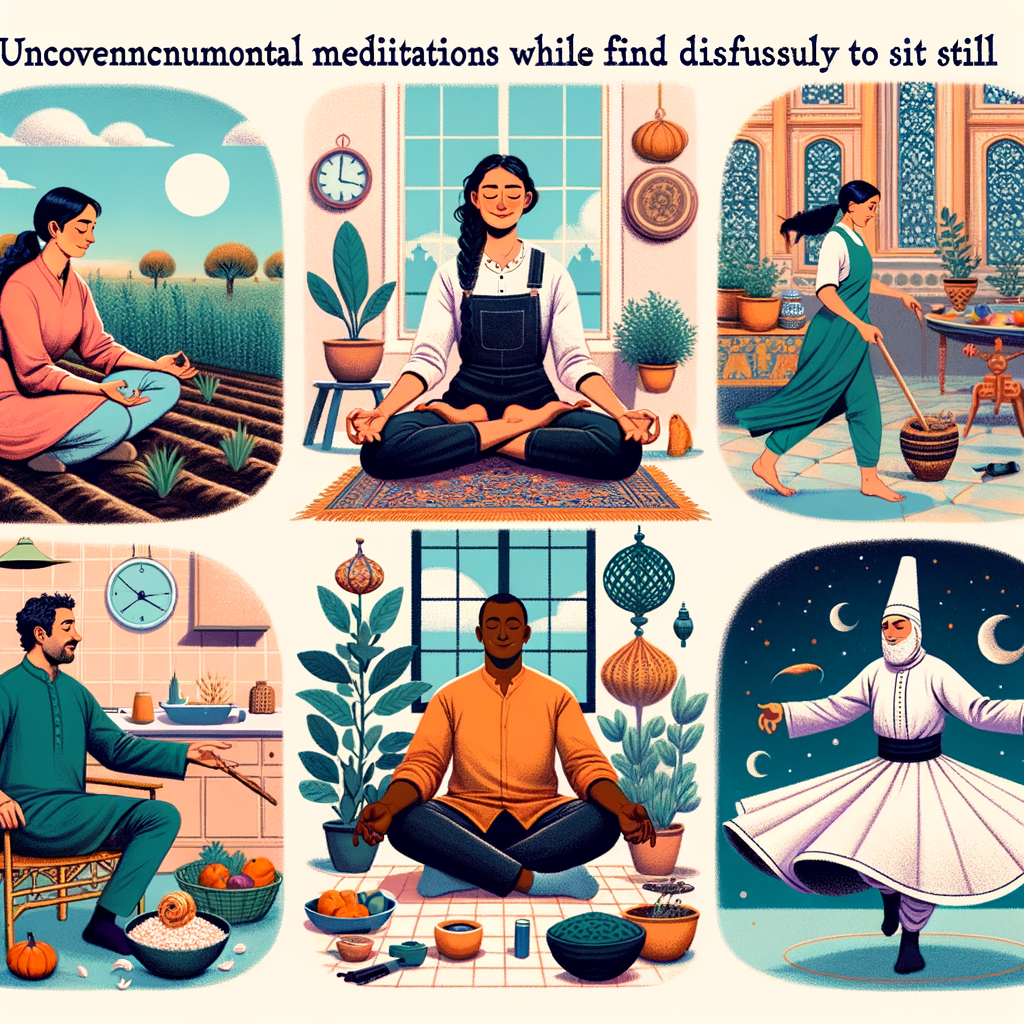
5 Unconventional Ways to Meditate for People Who Can’t Sit Still
Table of Contents
Introduction
Meditation is often associated with sitting still in silence, but for those who struggle with restlessness or have difficulty sitting still, traditional meditation practices can be challenging. However, there are unconventional ways to meditate that can accommodate those who need to move or engage in activity. Here are five alternative meditation techniques for people who can’t sit still: walking meditation, dancing meditation, drawing or coloring meditation, gardening meditation, and cooking meditation. These practices offer a way to incorporate mindfulness and meditation into daily activities, making it accessible for everyone.Moving Meditation: Finding Peace Through Physical Activity
Meditation is often associated with sitting still, closing your eyes, and focusing on your breath. However, for some people, the idea of sitting still for an extended period can be daunting, if not impossible. Fortunately, there are unconventional ways to meditate that involve physical activity, allowing individuals to find peace and mindfulness through movement. One unconventional way to meditate is through walking meditation. This practice involves walking slowly and mindfully, paying attention to the sensation of your feet touching the ground and the rhythm of your breath. Walking meditation can be done anywhere, whether it’s in a park, on a beach, or even in your own backyard. The key is to focus on the present moment and let go of any distractions or thoughts that may arise. Another way to meditate through physical activity is by practicing yoga. Yoga is a mind-body practice that combines physical postures, breathing exercises, and meditation. The physical postures help to release tension in the body, while the breathing exercises and meditation promote relaxation and mindfulness. Yoga can be practiced in a class setting or at home, making it a versatile option for those who prefer to move while meditating. Dancing is another unconventional way to meditate. Dancing allows you to express yourself through movement and can be a powerful way to release emotions and connect with your body. Whether you’re dancing alone in your living room or in a group setting, the key is to let go of any self-consciousness and allow yourself to be fully present in the moment. Tai chi is a form of moving meditation that originated in China. It involves slow, graceful movements and deep breathing, promoting relaxation and mindfulness. Tai chi can be practiced alone or in a group setting and is suitable for people of all ages and fitness levels. The gentle movements make it an ideal option for those who may have difficulty with more strenuous forms of exercise. Finally, gardening can be a form of moving meditation. Gardening involves physical activity, such as digging, planting, and weeding, but it also requires focus and attention to detail. By immersing yourself in the task at hand and connecting with nature, you can find a sense of peace and mindfulness. Gardening can be a therapeutic way to meditate for those who enjoy being outdoors and working with their hands. In conclusion, meditation doesn’t have to involve sitting still. For those who struggle with traditional forms of meditation, there are unconventional ways to meditate through physical activity. Walking meditation, yoga, dancing, tai chi, and gardening are all options that allow individuals to find peace and mindfulness through movement. By incorporating these practices into your daily routine, you can experience the benefits of meditation without having to sit still.Mindful Crafting: Using Creative Hobbies as a Form of Meditation
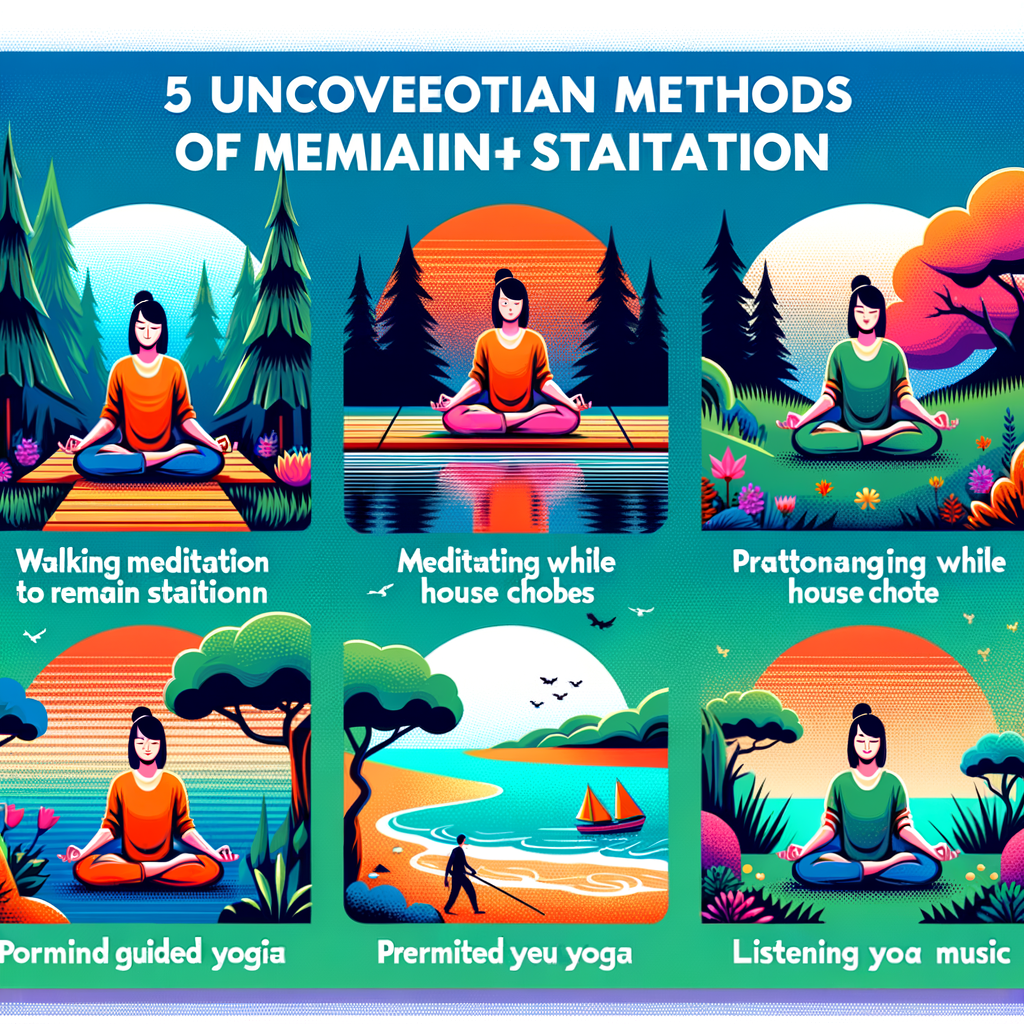
Meditation is often associated with sitting still, closing your eyes, and focusing on your breath. However, for many people, the idea of sitting still for an extended period can be daunting, if not impossible. Fortunately, there are unconventional ways to meditate that don’t require you to sit still. In fact, engaging in creative hobbies can be a form of meditation that allows you to focus your mind and find a sense of calm. One way to meditate without sitting still is through mindful crafting. Crafting activities such as knitting, crocheting, or even coloring can be a form of meditation. The repetitive motions of these activities can help to focus the mind and create a sense of calm. As you engage in these activities, you can practice mindfulness by paying attention to the sensations in your hands, the colors and textures of the materials, and the rhythm of your movements. Another unconventional way to meditate is through movement. Activities such as yoga, tai chi, or even walking can be meditative. These activities require you to focus on your breath and the movements of your body, which can help to quiet the mind and reduce stress. As you move, you can practice mindfulness by paying attention to the sensations in your body, the rhythm of your breath, and the environment around you. Gardening is another activity that can be a form of meditation. The act of planting, watering, and tending to plants can be a way to connect with nature and find a sense of peace. As you garden, you can practice mindfulness by paying attention to the feel of the soil, the smell of the plants, and the sounds of the birds and insects. Cooking can also be a meditative activity. The process of chopping, stirring, and tasting can be a way to focus the mind and find a sense of calm. As you cook, you can practice mindfulness by paying attention to the colors and textures of the ingredients, the sounds of the pots and pans, and the smells of the food. Finally, playing a musical instrument can be a form of meditation. The act of playing music requires focus and concentration, which can help to quiet the mind and reduce stress. As you play, you can practice mindfulness by paying attention to the sounds of the instrument, the feel of the keys or strings, and the rhythm of the music. In conclusion, meditation doesn’t have to involve sitting still. Engaging in creative hobbies such as crafting, movement activities such as yoga or walking, gardening, cooking, or playing a musical instrument can all be forms of meditation. These activities allow you to focus your mind, find a sense of calm, and practice mindfulness. So, if you’re someone who can’t sit still, consider trying one of these unconventional ways to meditate and discover the benefits of mindful crafting.
Comments